

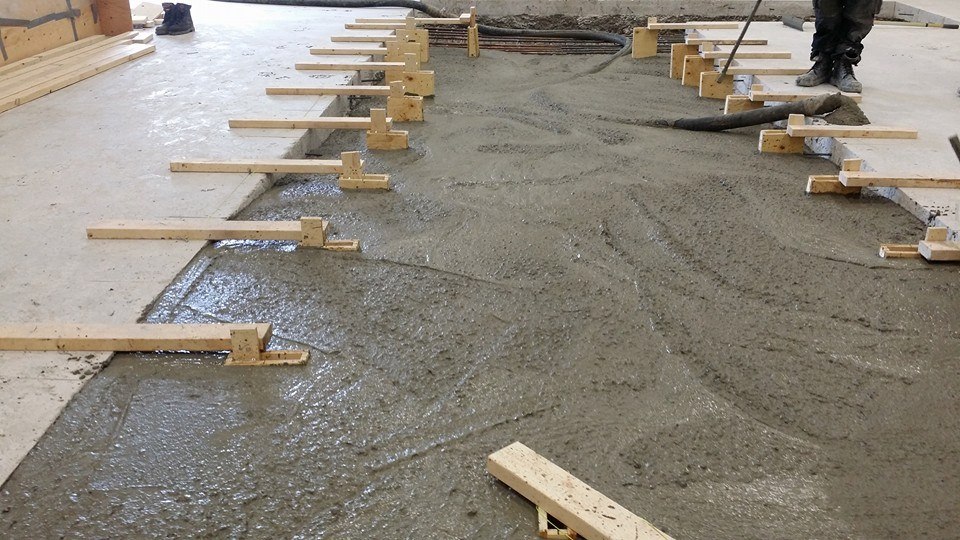
Universal Concrete Services Ltd provides industrial concrete slabs for machinery across Toronto, designed to support heavy equipment, distribute loads, and maintain surface performance over time. These slabs are used in commercial and industrial environments where equipment operates continuously and standard floor systems may not be sufficient.
Concrete Slabs Built for Equipment Loads
Industrial machinery places different demands on a slab compared to standard building use.
These slabs must handle:
- Heavy static loads from equipment weight
- Load transfer across a defined footprint
- Repetitive operational stress
- Surface wear from use and maintenance activity
Unlike general-purpose concrete floors, slabs supporting machinery need to be designed around how the load is applied and how it spreads through the concrete.


Load Distribution and Slab Performance
One of the main roles of an industrial slab is to spread concentrated loads across a wider area.
If that doesn’t happen properly, it can lead to:
- Cracking around equipment bases
- Uneven settlement
- Surface deterioration over time
Concrete strength is typically verified through compressive testing, where samples are tested under load to confirm performance against specified requirements[1]. This helps ensure the slab can handle the expected stresses once equipment is installed.


Where These Slabs Are Used in Toronto
Industrial concrete slabs for machinery are commonly installed in:
- Manufacturing and fabrication facilities
- Warehouses with fixed equipment systems
- Mechanical rooms with large equipment footprints
- Automotive and service environments
- Processing and packaging areas
In many Toronto projects, these slabs are installed within existing buildings, requiring removal, modification, or reinforcement of existing floor sections.
Industrial Slab Construction Process
Site Evaluation
We review equipment layout, load requirements, and existing slab conditions to determine the appropriate approach.
Demolition and Preparation
If the existing concrete is not suitable, sections may be removed and prepared for replacement.
Proper surface preparation is important when tying new concrete into existing slabs. Removing weakened material and preparing the surface helps improve how the new slab performs over time[2].
Concrete Placement
Concrete is placed to achieve the required thickness and consistency based on the equipment load and footprint.
Surface Finishing
The surface is finished based on how the slab will be used, including levelness and durability under equipment operation.
Standards such as CSA A23.1/A23.2 outline requirements for concrete materials and placement in Canadian construction[3].


Surface Durability and Wear Resistance
Industrial slabs supporting machinery are exposed to ongoing wear.
This can include:
- Equipment vibration
- Maintenance traffic
- Contact from tools or components
Surface durability can be evaluated using abrasion resistance testing methods, which measure how well concrete resists wear under mechanical friction[4].
A slab that wears down too quickly can affect both equipment stability and long-term usability of the space.
Toronto Code and Permit Considerations
At Universal Concrete Services Ltd, we complete all projects under the most up-to-date building codes. Concrete slab work may fall under building code requirements depending on the scope.
The Ontario Building Code sets out requirements for structural and construction practices, and Toronto-specific permit requirements can be reviewed through the City of Toronto Building Services process.
When a Standard Slab Isn’t Enough
An industrial slab for machinery is typically required when:
- Equipment loads exceed typical floor design limits
- The footprint creates concentrated stress points
- Long-term durability is needed under continuous use
- Surface performance affects equipment operation
In these cases, the slab becomes part of the equipment system—not just the floor underneath it.


Industrial Slab vs Standard Concrete Floor
| Feature | Industrial Slab for Machinery | Standard Concrete Floor |
|---|---|---|
| Load Handling | Designed for concentrated loads | General use loads |
| Surface Durability | Higher | Moderate |
| Thickness | Based on equipment requirements | Standardized |
| Long-Term Performance | Built for continuous use | Not always suitable |
Request an Industrial Concrete Slab in Toronto
If you’re installing equipment or upgrading an existing space, the slab underneath it plays a direct role in performance.
Universal Concrete Services Ltd provides industrial concrete slab construction for machinery across Toronto, with work aligned to equipment layout and site conditions.
Resources
- https://store.astm.org/c0039_c0039m-21.html
- https://store.icri.org/item/3101r2008-english-pdf-guideline-surface-preparation-repair-deteriorated-concrete-resulting-reinforcing-steel-corrosion-342512
- https://www.csagroup.org/store/product/CSA%20A23.1%3A19-CSA%20A23.2%3A19/
- https://www.astm.org/standards/c944
